

Podcasts

Podcast: Sepsis, a worldwide problem crying out for a solution
Dr Jakki Cooney, co-founder of UL spinout Cala Medical, based in the Nexus Innovation

There are over 9,000 people living with Multiple Sclerosis (MS) in Ireland. While there have been significant advances in pharmaceutical treatments to reduce the rate and severity of MS relapses, exercise and rehabilitation remain the cornerstone for the treatment of the symptoms and resulting disability for people with MS.
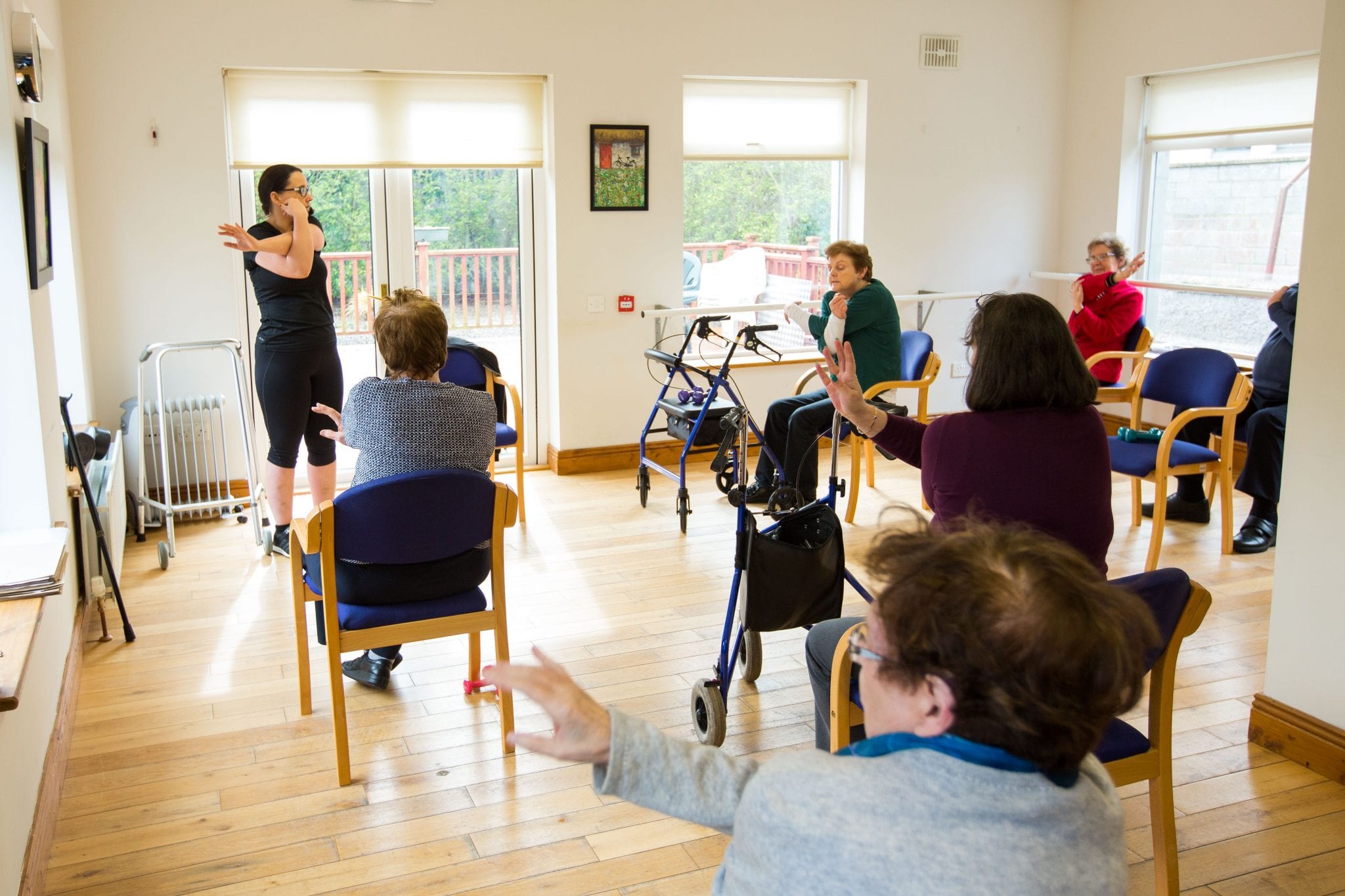
Research conducted by the MS Research Team led by Prof Susan Coote at the University of Limerick (UL) has contributed to a complete change in thinking about the benefits of exercise for people with MS. Twenty years ago people living with MS were advised to “take it easy”. Now there is a significant body of evidence to say that exercise is beneficial for a number of key symptoms like walking and fatigue. Members of the MS Research Team at UL, as part of the Health Research Institute, have worked in partnership with MS Ireland to investigate the beneficial effects of exercise. The questions the research programme asks are generated by people with MS and by physiotherapists who treat people with MS. This deliberate approach of involving the end-users of research from the inception of a project enhances efforts to translate research findings into everyday practice.
In 2011 UL signed a Memorandum of Understanding with MS Ireland, the sole national organisation providing information, support and advocacy services to the MS community. Through this MOU, the MS Research team at UL work with MS Ireland to enhance research and knowledge exchange, and to positively impact the lives of people living with MS.
Underpinning research:
The foundation project for this programme of work was “Getting the Balance Right” (GTBR) a multicentre, stratified, randomised controlled trial of exercise and physiotherapy which took place between 2007 and 2009. This trial was unique in that it evaluated the effectiveness of exercise in community settings rather than research laboratories, and grouped people according to their level of disability. The questions underpinning this trial were driven by the information needs of MS Ireland and the community of physiotherapists in Ireland working with people with MS. This optimised the incorporation of the research findings into practice. In the trial, the research team investigated the effect of different types of exercise in reducing the symptoms and improving quality of life for people with MS.
The results for those with minimal disability (Ref 1) are published in the leading international journal in the field, MS Journal. The trial found that a ten week exercise programme, consisting of either physiotherapy classes, fitness instructor classes or yoga classes all have a significant effect on the impact of MS and on fatigue and on walking ability. Importantly this paper added to the literature on the benefits of exercise on fatigue for people with MS. Fatigue is often cited as a symptom that results in inactivity and poor health outcomes. This paper confirmed that fatigue is improved by exercise, challenging the prior belief that exercise could worsen fatigue.
The second key finding of the trial was that all three forms of exercise resulted in similar improvements. This suggests that people with minimal disability may not need to take part in exercise in a medical model of care, rather that it is safe and effective for them to exercise in the community.
One of the challenges in combining studies of exercise to date using meta-analysis is that there are a myriad of outcome measures that have been used in trials. A key paper in the exercise in MS field was the result of a consensus conference on outcome measures (Ref 2) of which Prof Coote was a core member. This paper describes the process in reaching consensus on the core outcome measures to be used in MS exercise trials and has received significant attention and has shaped future trials in the area enabling pooling of data and the development of the first clinical guidelines on exercise for MS.
Similarly the paper reporting the follow up results for GTBR is presented in a leading international journal. When the research team followed up on the participants three months later, a key finding was that the benefits had, for the most part, not been maintained (Ref 3). This can be attributed to the fact that people ceased exercising when the classes finished. This finding that exercise is beneficial, but is not maintained has been the springboard to several other international, multidisciplinary, funded studies. For example the research team are currently developing a website for MS Ireland “Activity Matters” that aims to give people with MS the knowledge, skills and attitudes to successfully engaged in long term exercise. As with all the studies, this programme engages with people living with MS from the outset. A study reporting what people living with MS want from this website resource (Ref 4) has been published in a leading rehabilitation journal. It confirmed that people with MS want information stratified according to their level of disability, and that they want information in order for them to choose their preferred activity. This concept of choice and control as enablers of long term participation in health promoting exercise is supported by theories of physical activity behaviour change.
Prof Coote was invited to write a position paper (Ref 5) defining the key questions in addressing physical inactivity in MS. This paper has been used by funders internationally to guide their funding priorities. The research team are also now collaborating internationally to investigate physical activity theory. With funding from the Health Research Board, the team and their international partners aim to develop interventions to address the problem of physical inactivity in people with MS.
The GTBR foundation study also considered the effect of exercise for people with a greater level of disability who use walking frames or rollators. It found significant improvements in balance among this population. The research team further investigated whether this improvement in balance led to reductions in falls. Subsequently the research team published an exploratory study of falls and MS in a leading rehabilitation journal, Archives of Physical Medicine and Rehabilitation (Ref 6). The paper reported that 50% of people with MS had fallen in the last three months and that those who had fallen had significantly worse quality of life. Importantly the study found that the ten week physiotherapy programmes, in a group setting, reduced the number of falls the participants had. Given the physical, psychological and social implications of falls, this is an important finding for both people with MS and the health and social care services that support them. This paper is highly cited and has resulted in funding awards from MS Ireland, through the Ireland Fund and the Irish Research Council to identify those in need of treatment, and develop theory based treatments to address this important issue. Prof Coote is a member of the International MS Falls Prevention Research Network that is developing a protocol for a multicentre intervention with the target of reducing falls, improving balance, improving participation and quality of life.
Impact on people with MS
Walking disability and fatigue are among the most commonly reported and impactful symptoms of MS, and are associated with increased service needs and unemployment. In the original GTBR trial the research team found statistically significant improvements in symptoms that additionally have significant clinical and personal implications. People with MS reported that their fatigue was much less “my energy . . . I’m not as tired, not as heavy, I used to feel so heavy in myself and dead in myself, I feel I’m lighter and more flexible” and that their walking had improved “the fact was that I loved walking and the fact that they thought I could walk, go for a walk again was a huge thing for me”.
These improvements in walking and fatigue resulted in a reduction of the impact of MS on their daily lives and people reported that they were more able to do the things they wanted “I found that this year was the first year in four years that I started doing a bit of gardening, it was a great feat for me to be able to finish it” confirming the positive impact of this programme for people with MS.
In addition to the beneficial effects on physical symptoms, people with MS report how these classes have created a sense of peer support and motivation “but it’s a great motivator to be in a group”. They also talked about how they were given some control over their symptoms that was somewhat empowering “It wasn’t about taking a drug or a pill it was about helping yourselves”. These findings from the qualitative research accompanying the original study augment the quantitative results suggesting both physical and psychological improvements following exercise that continue to be seen by members of MS Ireland today. (All quotes, Source 1)
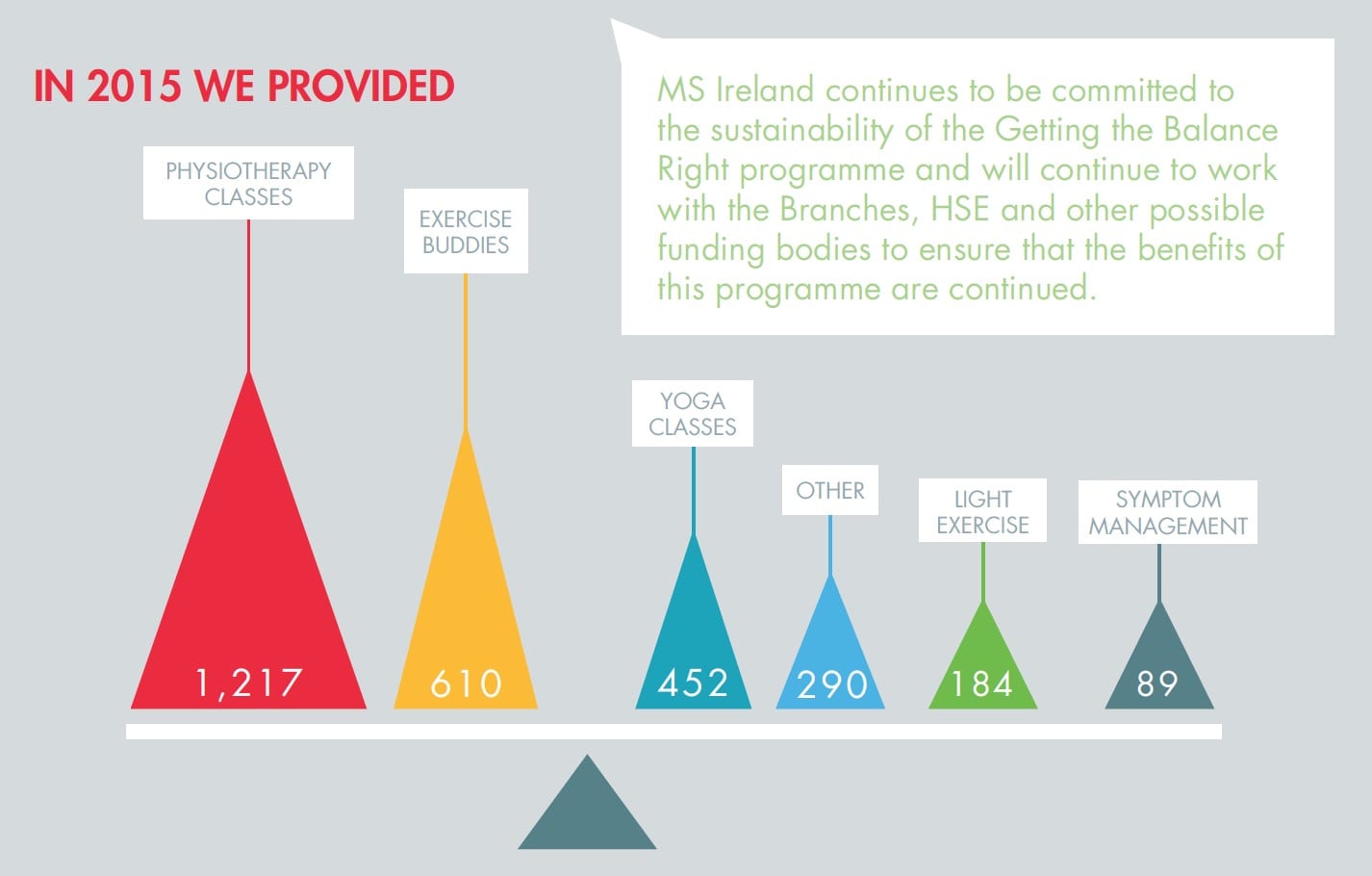
The results of GTBR have fundamentally changed the way MS Ireland delivers their physiotherapy services. GTBR classes, utilising the research findings, are now rolled out across all regions by MS Ireland, and people are benefitting continuously from this evidence based, effective treatment. The 2015 MS Ireland Annual Report highlights that 1,217 took part in GTBR Physio Classes, 610 benefitted from individual exercise buddies and 452 took part in beneficial Yoga classes thus the research is directly reaching almost 25% of people living with MS in Ireland. (Source 2)
Impact on practice and policy
The partnership approach to this programme of research has led to significant impacts for a range of stakeholders. The collaboration between UL, MS Ireland and the Physiotherapists Interested in MS (PIMS) on community of practice means that the questions asked in the research are important to people with MS and clinicians. The use of Public and Patient Involvement from the development of research questions and throughout the research process ensures that this research is grounded in the needs of, valued by and adopted by people with MS. This tripartite approach to the evaluation of the optimal physiotherapy and exercise programmes has resulted in significant impact on physiotherapy services for people with MS in Ireland. Additionally, the structure of the physiotherapy and exercise service delivered by MS Ireland, has also been augmented through the partnership between the MS Research team at UL and MS Ireland. Prof Coote, Mr Larkin, Dr Garrett, and Ms Casey have all contributed to the development of the physiotherapy and exercise services of MS Ireland. For example Prof Coote and Mr Larkin developed the physiotherapy policies and procedures for MS Ireland. (Source 3)
The research team have used innovative dissemination methods to optimise the translation of their research to clinical practice and hence its impact. For example the research team held 10 road shows around the country where they presented the results of GTBR. They also presented a practical implementation guide to physiotherapists and health service managers (n=200). The research team created and published downloadable guides for implementing the programmes on MS Ireland’s webpages which have to date been accessed over 3,000 times; therapists frequently commend the usefulness of the guidelines. “I’ve starting using the MS exercise guides and I’m finding them really useful and easy to use. It’s great to have all the information there and the wording/diagrams are very clear. Congratulations to you and your team on the good work”. (Source 4)
In 2008, Prof Coote founded the PIMS community of practice, and this community has been a key enabler of the impact and transfer of research evidence to practice. This group currently has 76 members who come from a range of practice settings from acute hospitals, primary care and private practice across Ireland. This group has disseminated research findings from the MS Ireland research team at UL and other groups in a way that enables clinicians to adopt it in practice. The PIMS group have collaborated on studies that have identified the insufficient dosage of physiotherapy in the Health Service Executive (HSE) nationally and evaluated the effect of physiotherapy interventions as delivered in a range of settings. The findings have in turn been used by MS Ireland and the Neurological Alliance of Ireland (NAI) in lobbying for better service provision for people with MS, for example the NAI Submission to the Joint Oireachtas Committee for Health and Children October 2010. (Source 5)
Prof Coote has provided more than ten continuous professional development courses to over 300 clinicians around the country on exercise and MS that have always been oversubscribed and received excellent feedback. UL and MS Ireland have organised an annual information day for approximately 100 health professionals annually since 2009 and on many occasions the team’s research findings have been presented at this forum. These annual events have additionally provided a forum to invite international leaders in MS and have resulted in ongoing collaborations.
The impact on the wider neurology community has been enabled through presentation at national and international conferences and through the participation of Aidan Larkin and Prof Susan Coote at the MS Pathway meetings. Research by members of the team is cited in the 2016 National Clinical Programme of Neurology Model of Care launched by the Royal College of Physicians of Ireland, the National Clinical & Integrated Care Programmes and the HSE. (Source 6)
Sources to corroborate the impact

Dr Jakki Cooney, co-founder of UL spinout Cala Medical, based in the Nexus Innovation
Researchers at the University of Limerick are developing skills in interdisciplinary working and using this

In Ireland, only 30% of women and 45% of men over 65 remain disability-free for