


Podcasts

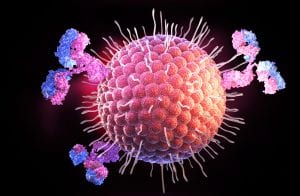
Podcast: Sepsis, a worldwide problem crying out for a solution
Dr Jakki Cooney, co-founder of UL spinout Cala Medical, based in the Nexus Innovation

Many of us will become a victim of crime at some point in our lives, yet many victims chose not to report these crimes to the police. Ultimately, a large number of victims in Ireland are not engaging in the criminal justice system. Researchers from the Centre for Crime, Justice and Victim Studies (CCJVS), School of Law have sought to better understand this phenomenon with a view to understanding how best to engage with and support victims of crime, while also informing public policy and legislative reform.
By focusing their research on the place of victims within the criminal justice system, the team is giving a voice to underrepresented minorities including victims with disabilities. Their research has actively influenced public policy and legislative reform, and informed teaching and learning with the establishment of Ireland’s first module in victimology. The researchers have built a reputation for ‘cutting edge’ (Source 8) research in the area of victims’ rights and as being ‘very influential’ (Source 1) in highlighting the role of the victims as a pivotal stakeholders. Collectively and individually, they frequently present to key stakeholders as part of legislative or policy reform initiatives, leading to direct influence on national strategies and law reform. Their research has improved victims’ access to redress through the criminal justice system, and delivery of vital supports and services.
Underpinning research:
The status of victims in the criminal justice process has altered over time. In the 17th and 18th centuries, the victim was the primary stakeholder, responsible for gathering and presenting evidence and witnesses. In other words, the victim owned the prosecution process. During the 19th and early 20th centuries, the State took responsibility for policing and prosecuting crime, effectively monopolising the criminal justice process. One consequence of this evolution was the exclusion of the victim, who had little or no role in the State versus Accused model of criminal justice (Ref 1)
This trend has begun to reverse over the past 20 to 30 years (Refs 6, 8 & 9). Researchers at the CCJVS are examining this changing role of the victim and documenting the variety of ways in which victims of crime are being written back into the criminal process in Ireland, while taking account of continuing challenges (Refs 7, 5, 11, 15, 17). Certain causal factors spurred and shaped changes in Ireland’s criminal process. The noble post-war dream of winning the war on crime began to fade in western countries from the 1970s onwards, as crime rates continued to rise despite massive investment focussed on deterring perpetrators. Crime became accepted as a normal social phenomenon, and discourse and practice moved away from an exclusive focus on normalising the wrongdoer. The victim became more central and visible under such a framework of understanding; victimology as a discipline highlighted the individual experiences of victims and their needs and concerns. (That trajectory is traced in Refs 1 & 9). During the 1970s, the women’s movement began to engage in ‘consciousness raising’ about female victimisation, highlighting previously unvoiced social problems. Campaigning activists established support networks such as Rape Crisis Centres and Women’s Refuge Centres, while drawing attention to the challenges posed by an exclusively State v Accused model. Such initiatives inspired broader concerns about victims in the criminal process. Victim surveys helped to gather data on experiences of crime and fear of crime, indicating significant under-reporting of crime by institutions. The systemic abuse that occurred in post-Independence Ireland firmly placed victimhood on the public agenda. Irish society was forced to confront widespread experiences of victimhood, aided by a media industry that was becoming more adept at individualising experiences of victimhood through focused analysis and imagery. The efforts of women’s groups is still strong as evidenced in Susan Leahy’s research on consent which has been utilised by the Dublin Rape Crisis Centre in their high profile campaign on consent (Ref 4, Ref 13, Ref 2).
Reintegration has also been facilitated by the courts and legislature at both domestic and EU level. The emerging ‘rights revolution’ is evident in both the criminal and civil spheres. The criminal justice process, which focused almost exclusively on the rights of the accused and the causes of their wrongdoing, has begun to embrace the multi-faceted experiences of victimhood.
The researchers seek to demonstrate that the emerging inclusion of victims can be seen as a response to a previous scandalous neglect: an attempt to correct an imbalance in which the victim was a silent abstraction, a background figure whose individuality hardly registered. While victims are re-emerging as important stakeholders, the researchers highlight the challenges ahead. Many advancements, particularly in Ireland, have been piecemeal in nature. Sustained progress has been hampered by the absence of any unified focus on the plight of victims in the criminal process. This is in part attributable to lack of resources, dissonance between criminal justice policy and practice, and embedded institutional practices. In addition, progress has been stymied by politicians’ unwillingness, particularly since the late 1990s, to put inclusion of victims at the centre of the criminal justice agenda (Refs 1, 6, 7, 12).
In their research, the team highlight more specific challenges within the system (Refs 1 & 6). Lack of knowledge about victims’ needs within the criminal justice community remains a central issue (Refs 1, 6, 10). Many difficulties have been reported with provision of information to victims and with under-reporting of crime Kilcommins et al, 2018; Leahy and Spain, 2017; Spain et al 2014). Other issues that concern victims include fear of crime; intimidation by the process; lack of empathy and understanding when reporting crime; difficulties with procedural rules and legal definitions (e.g., consent in rape cases); delays in the system; lack of protection and security; under- and over-criminalisation; overcrowded courtrooms; low levels of awareness of victim support groups; and inadequate support services (Refs 1, 2, 3, 5, 6, 10).
This research by the researchers within the CCJVS has also identified a lack of recognition of vulnerable witnesses in Ireland. Victims of crime with disabilities remain largely invisible, not least because they pose difficulties in relation to information gathering and fact finding within an adversarial justice system. A recent study on victims of crime with disabilities found, for example, that people with disabilities ‘are not being strategically identified as a victim group, either by victim support organisations, or those engaged at a central government policy level in dealing with victims’ issues’ (Refs 11, 14, 15 & 16).

Grants
European Commission Justice Programme, “Research on the identification and referral of victims of crime in Ireland in light of the implementation of the Victims’ Directive”, 2016, €51,144
Irish Research Council and the Irish Council for Civil Liberties, Developing a comprehensive human rights based response to drug and gang-related crime and community violence in Ireland, 2017-2019, €99,000
COSC, The National Office for the Prevention of Domestic, Sexual and Gender-based Violence, Analysis of text as part of the final review of National Strategy on Domestic, Sexual and Gender-based Violence, 2010-2014. €5,786.
Irish Research Council, “Access to Justice for Victims with Disabilities in Ireland – Forgotten Figures within our Adversarial Model of Justice,” 2013-2017, €90,400.00.
Irish Research Council, “Exploring the Experiences of Deaf victims in the Spaces and Processes of the Irish Criminal Justice System“, 2013-2015, €90,990.00.
European Commission “Support of Victims of Crime Services to the Victims of Crime”, 2008-2009, €38,456.00.
Details of the impact
The impacts of this research range from influence on criminal law reform, supporting stakeholder engagement within the criminal justice system, education and awareness raising. This research takes a socio-legal approach, examining the ways in which law impacts its changing social context and challenging our understanding of the role of victims (Source 6). It includes empirical research into the day-to-day problems confronting organisations working in the area of victims’ rights. Through developing relationships with key stakeholders within the criminal justice sector and contributing to international debate (Source 4), the researchers are ensuring their research has the highest possible reach and influence on national policy.
In the sphere of national policy and legislative reform, this research informed the Sexual Offences) Act 2017 (Source 3). The researchers have been publically acknowledged by the Minister for Justice on several occasions for their role in policy and legislative reform, on different categories of victims, for example, victims of domestic, sexual and gender based violence (Source 11 & 12).
The application of evidence-based policy making which utilises the findings of these researchers has a wide impact, benefiting NGOs and government organisations across the criminal justice sector. These include: the Irish Council for Civil Liberties; the National Disability Authority; the Commission for the Support of Victims of Crime; and the Equality Authority. In addition, team continue to provide pro bono consultancy advice to victim support organisations including Dublin Rape Crisis Centre and Adapt House. These research activities have informed best practice and support successful advocacy on behalf of victims groups (Sources 2, 7, 8).
The research has informed curriculum development for both universities and professional bodies. A new module, Penology and Victimology, designed as part of the Masters in Human Rights in Criminal Justice programme to reflect a renewed interest in victims in the criminal justice system and the expertise within the School. The researchers have contributed to professional training and standards, in particular judicial education (Source 5) and their expertise is sought out and recognised at a national level (Sources 9 & 10).
The cumulative impact of the research is influencing national policy and legislative reform and improving the experience of victims of crime in Irish society. In addition, this research to date has opened up further avenues of inquiry. For example, only 28% of women who experience intimate partner violence report the most serious incident. Even individuals who do report crimes fall out of system. Why are victims not reporting? Why are they falling out of the net? Evidence-based answers to these questions will help inform public policy decisions about funding and infrastructure development that will most effectively assist victims. These researchers at the CCJVS are well-positioned to provide these answers and continue to contribute their research in this respect at both national and international levels.
Assistant Commissioner Anne-Marie McMahon, An Garda Siochána

Dr Jakki Cooney, co-founder of UL spinout Cala Medical, based in the Nexus Innovation
Researchers at the University of Limerick are developing skills in interdisciplinary working and using this

In Ireland, only 30% of women and 45% of men over 65 remain disability-free for