


Case Studies

Ecologically engineered solutions
Ecologically engineered solutions to rehabilitate mining waste and mine sites Home Short summary of the

Pharmaceutical manufacturing contributes vitally to Ireland’s economy: it employs over 25,000 individuals directly and 24,500 indirectly, and produces over 50% of all exports, making Ireland the second-largest pharmaceutical exporter in the world . However, the sector faces several global challenges: the emergence of lower-cost economies; the ‘patent cliff’; and the rise of generic medicines. It has also suffered from a lack of cohesion between research and industry and poor fundamental understanding of certain pharmaceutical manufacturing processes. The Synthesis & Solid State Pharmaceutical Centre (SSPC) has collaborated with industry to optimise these pharmaceutical processes, enabling Ireland to confront many of the global challenges above. Resulting gains in productivity have saved tens of millions of euros for Ireland’s pharmaceutical industry. Additional impacts include job creation and retention; a broad collaborative network for sharing expertise; greener manufacturing processes. Ireland is becoming a global hub of pharmaceutical process innovation and advanced manufacturing.
Underpinning research
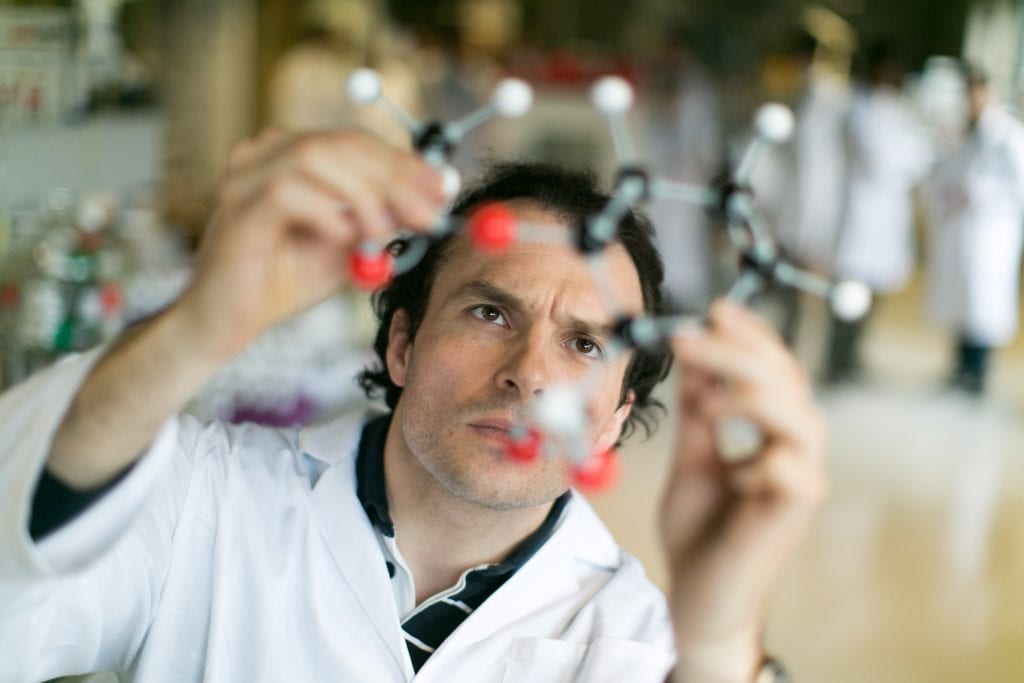
Pharmaceutical solids are manufactured via a series of chemical synthesis steps followed by a number of unit operations, which involve processing solids, including crystallisation, drying, milling, granulation and tableting. These operations establish key properties of the pharmaceutical solids that affect downstream processing and eventual bioavailability.
Fundamental research by the SSPC significantly increased the sector’s capability to produce pharmaceutical solids with predefined characteristics, including crystalline or amorphous composition, particle size, habit and morphology, tensile strength, powder flow and release properties. Previous work on crystallisation in bulk chemicals by University of Limerick (UL) researchers (Hodnett & Frawley) and Aughinish Alumina sowed the seeds for the SSPC collaboration (funded by >€1 million from Marie Curie Transfer of Knowledge 2004-2007 [RA 11]). Based on the significant success of this collaboration, UL (Hodnett & Shire) suggested applying crystallisation research within the pharmaceutical sector. Potential collaborators were open to this idea as the UL academics had a track record of working well with both industry and other academic institutions and were seen as capable of delivering solutions within parallel industries.
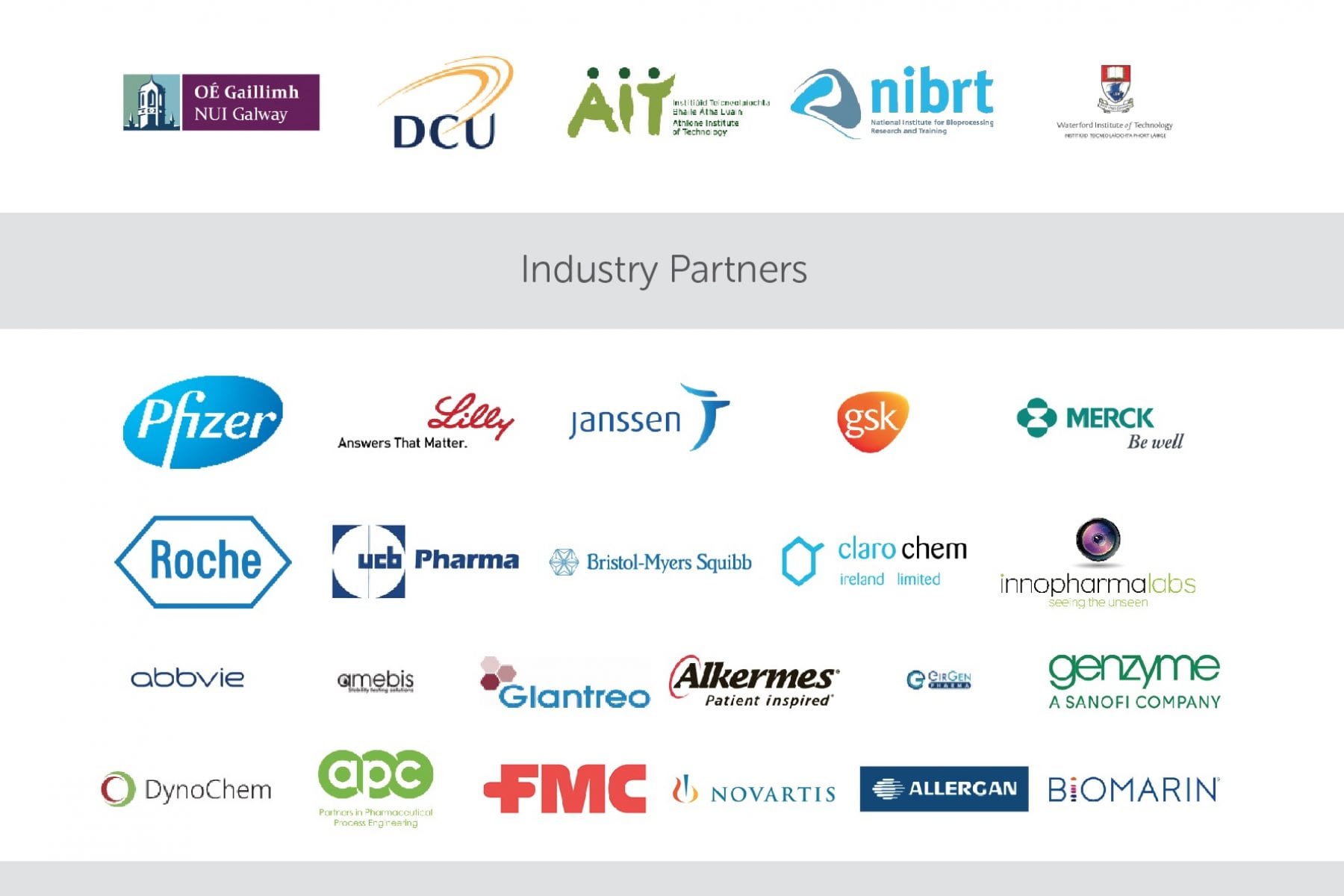
As such, UL has been central to creating a dialogue with industry. From the beginning, the research has been critically informed by the needs of the pharma end-users, including: Pfizer, Eli Lilly, Glaxo Smith Kline, Janssen, Merck, Roche, Bristol Myers Squibb, UCB Pharma, and Clarochem Ireland Ltd. Each academic collaborator to the SSPC has contributed specific techniques and expertise: the University of Limerick (UL) brought Physical Property Science, Polymorphism, Chemical Engineering, Modelling and Computational Fluid Dynamics (CFD); University College Cork (UCC), Synthetic Organic Chemistry and Solid State Properties; University College Dublin (UCD), Chemical Engineering; Trinity College Dublin (TCD), Pharmaceutics, Spray-Drying and Milling; and National University of Ireland Galway (NUIG), Analytics and Chemometrics. From the outset, the collaboration has been uniquely inclusive and equitable; all research monies are shared among partners, and all industry and academic members have an equal voice.
At its formation, the SSPC’s remit comprised 13 individual projects scheduled to run over 4-5 years. During this time, the SSPC successfully leveraged funding for an additional 11 PhD students, (€1,000,000) from a number of sources including the Irish Research Council (IRC), SFI, UL and industry, and added 14 projects to its portfolio. Over time, the research programme consolidated into three key strands of research: process crystallisation, particle engineering, and active pharmaceutical ingredient (API)/formulation interface.
In the period from 2007-2012 the SSPC received over €10.8 million in funding from SFI/Industry (RA 7 to 10); as a further testament to its research, an additional €31 million award (RA 6) allowed the SSPC to become a full research centre in 2013, with a core operations team (8), principal investigators (10), funded investigators (17), post-doctoral research associates (30), and PhD students (60). In lay terms, successful collaboration in the crystallisation space gave SSPC members (and funders) the confidence to expand their focus to cover the entire pharmaceutical process, from molecule to medicine. In the 12 months since becoming a fully-fledged research centre, the SSPC has added a further €8,459,272 (RA 1 to 5) to its portfolio. This brings the SSPC’s total funding to over €60 million; this has come primarily through grants from Science Foundation Ireland (SFI) and industry.
Dissemination
Early on, the SSPC identified key journals and high-impact conferences in which to publish and disseminate research results, leading to significant collaborative output in terms of publication and dissemination activities. The key outputs include over 145 publications in high-impact research journals (e.g. Refs 1 to 6), many of which are used daily by researchers in industry and are cited extensively (>150 for top 8 publications since the first paper was published in 2009).
The SSPC’s research has been presented to over 250 academic audiences nationally and internationally. In addition, the SSPC has hosted two conferences: in 2012, the 10th International Workshop on Crystal Growth of Organic Materials; and in October 2013, its inaugural flow chemistry conference in the area of continuous processing. The 2013 conference was attended by leading industrialists and academics from around the world, marking the SSPC as an emerging leader in the field. Additionally, the conference has led to engagement with SK Korea, Astra Zeneca, and corporate Research & Development headquarters of all existing industrial partners; Astra Zeneca is now represented on the SSPC Governance committee. Subsequent to this conference, Prof. Hodnett was invited to contribute to a White Paper on continuous crystallisation which was presented in MIT in May 2014.
Research Publications
1. Barrett, M., Hao, H., Maher, A., Hodnett, B.K., Glennon, B. and Croker, D. (2011), ‘In situ monitoring of supersaturation and polymorphic form of piracetam during batch cooling crystallization’, Organic Process Research & Development, 15(3): 681-687
2. Croker, D.M. Davey, R.J., Rasmuson, A.C, and Seaton, C.C. (2013) ‘Solution Mediated Phase Transformations between Co-crystals’, CrystEngComm, 15 (11): pp. 2044-2047
3. O’Mahony, M.A., Seaton, C.C., Croker, D.M., Veesler, S., Rasmuson, A.C., and Hodnett, B.K. (2013) ‘Investigation into the Mechanism of Solution-Mediated Transformation from FI to FIII Carbamazepine: The Role of Dissolution and the Interaction between Polymorph Surfaces’, Crystal Growth & Design, 13 (5): 1861-1871.
4. Croker, D.M.; Hennigan, M.C.; Maher, A.; Hu, Y., Ryder, A.G., Hodnett, B.K. (2012) ‘A comparative study of the use of powder S-ray diffraction, Raman and near infrared spectroscopy for quantification of binary polymorphic mixtures of piracetam’, Journal of Pharmaceutical and Biomedical Analysis, 63: 80-86.
5. O’Ciardha, C.T., Mitchell, N.A., Hutton, K.W., Frawley, P.J. (2012) ‘Determination of the Crystal Growth Rate of Paracetamol As a Function of Solvent Composition’, Industrial & Engineering Chemistry Research, 51 (120): 4731-4740.
6. Frawley, P., Mitchell, N.A., Ó’Ciardhá, C.T. and Hutton, K.W. (2012), ‘The effects of supersaturation, temperature, agitation and seed surface area on the secondary nucleation of paracetamol in ethanol solutions’, Chemical Engineering Science, 75(18): 183–197
Research awards (lead institution)
1. Walker, G. Model Predictive Control of Continuous Pharmaceutical Processes. Funded by SFI/Department of Jobs, Enterprise and Innovation (DJEI). 2014: €1,202,653
2. Zaworotko, M. SFI Researchers Professorship. Funded by SFI. 2013: €5,000,000
3. Albrecht, M. Consolidator Grant. Funded by EU Excellent Science ERC. 2013: €2,100,000
4. Healy, A. M. Linking Industry and Academia in Teaching Pharmaceutical Development and Manufacture (LIAT-Ph). Funded by EU Erasmus Lifelong Learning. 2013: €67,000
5. Frawley, P. Process Modelling. Funded by Enterprise Ireland (EI)/SFI. 2013: €89,619
6. Hodnett, B.K. Synthesis and Solid State Pharmaceutical Centre. Funded by SFI/Industry. 2013-2019: €31,000,000
7. Crean, A. Formulation Development Project. Funded by Confidential Industry. 2012-2014: €450,080
8. Hodnett, B. K. Continuous Crystallisation Mathematical Modelling, SFI/Industry, 2011-2013: €997,974
9. Rasmusson, A. Nucleation of Pharmaceutical Compounds. Funded by SFI, 2011: €841,757
10. Hodnett, B.K. Solid State Pharmaceutical Cluster. Funded by SFI/Industry. 2008-2012: €8,536,410
11. Aughnish Alumina Ltd. [Reacon]. Funded by Marie Curie Transfer of Knowledge – REACON. 2004-2008: €1,721,773
Details of the impact
Professional Communities of Practice
The SSPC has created a consortium of industry and academic partners in Ireland which is the most inclusive and collaborative pharmaceutical/academic partnership in the world. To support this collaboration, the SSPC laid a strong foundation for communication and information sharing by developing a number of key web portals, including:
1. The Best Practice Crystallisation (BPX) website (http://www.bpx.ie), which is the world’s first pharmaceutical best-practice portal for crystallisation. The BPX portal has over 16,000 web-users, with over a quarter of a million page views since September 2007. Over 50% of its registered members coming from outside Ireland (EU, United States, and the rest of the world), and it boasts over 500 active members in industry and academia. Pfizer has made this site an integral part of their Global R&D training regime for researchers. Minister for Enterprise, Trade and Employment Mary Coughlan TD, when launching the BPX portal, commented that “(this) development…enables unprecedented collaboration among a range of industrial and academic partners…in the field of pharmaceutical compound crystallisation.”
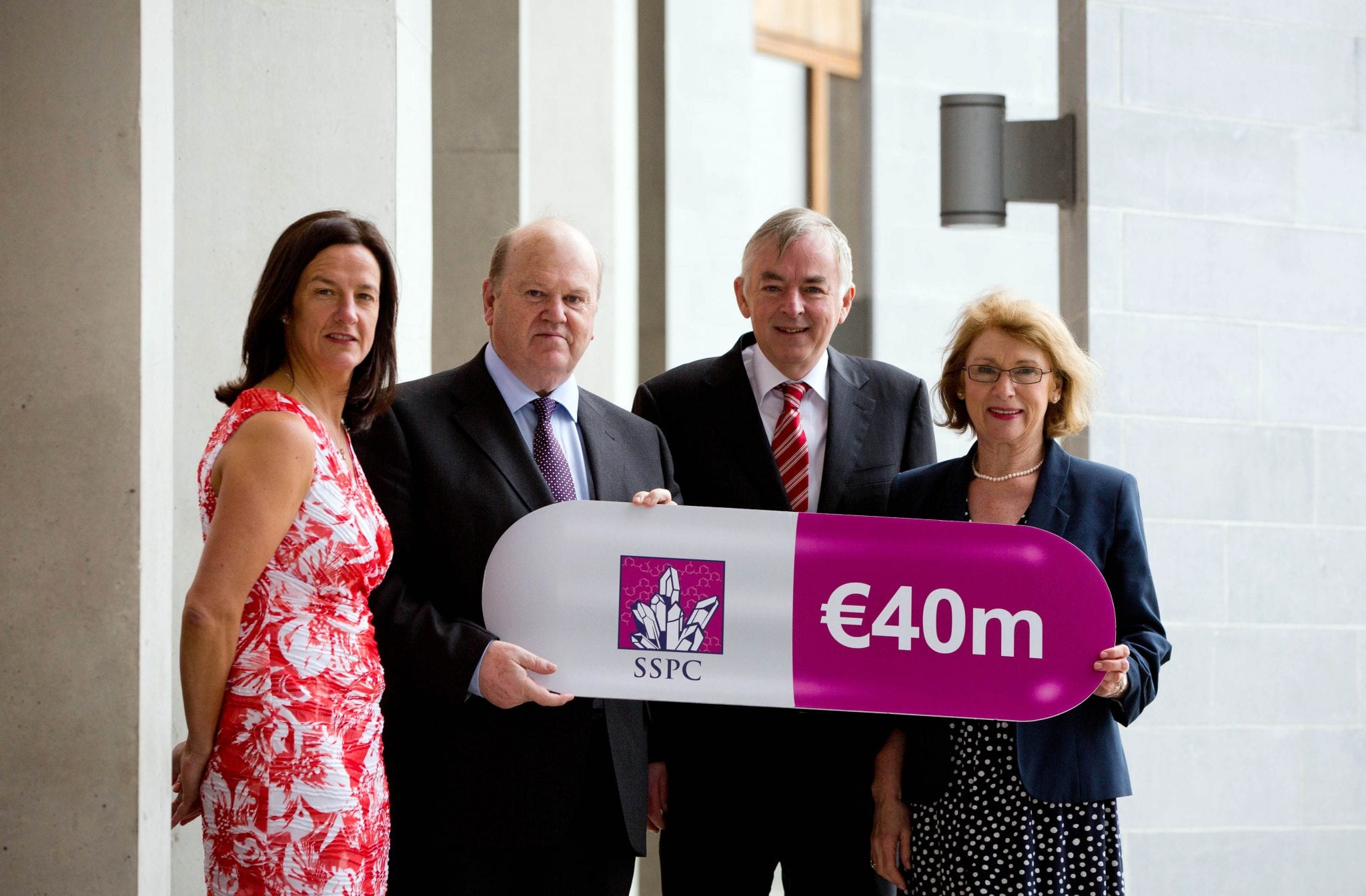
2. Access to Third Level Analytical Services (ATTLAS, http://www.attlas.ie), which provides a ‘one-stop-shop’ for the pharmaceutical industry; it details all facilities, equipment and analytical services available across all Irish higher education institutions (HEI’s), including over 230 individual pieces of equipment incorporating 92 analytical techniques that can address over 160 industry-related problems. With over 50,000 page views and 43,000 web users, ATTLAS is widely cited as a resource for industry and academia alike . ATTLAS was launched by Irish Minister for Finance Michael Noonan TD; Science Foundation Ireland, the government funding body for science research, stated, “We need to support this important industry in Ireland and we more than have the collective capability to do so, as ATTLAS now clearly indicates.”
Capacity building
In addition to its academic outputs, the SSPC has engaged in extensive capacity building through education and training. SSPC academics designed and ran 17 bespoke training courses across Ireland, attended by over 2,000 participants, focusing on crystallisation and other challenges facing the pharmaceutical industry. 92% of participants rated these workshops excellent, commenting: “Communication was excellent”; “Very clear course content”; “Case studies were a great idea; “Interactive and thought provoking”. As a result, companies across Ireland have changed their batch manufacturing instructions (effectively altering drug manufacture “recipes”), leading to improved quality and reduced costs.
For example, Company A has been able to design 7/10 new crystallisation processes, which increased their parent company’s confidence in their R&D capacity. The company stated that a key benefit of SSPC collaboration was “tailored training programmes on crystallisation for our chemists and engineers”. This provided a deeper understanding of the crystallisation process which had heretofore never been achieved.
Reciprocal training of researchers, with more than 20 three-month PhD student placements in industry, has led to further knowledge exchange and capacity building within the SSPC. Training and reciprocal knowledge transfer allowed Company B to improve one particular crystallisation process, leading to savings of millions of euros. This shifted the perception of that company in the eyes of its corporate HQ thereby allowing it to tender internally for more ambitious projects thereafter. As a result, Company B attracted new product development and production, which would not have occurred without the specialised knowledge developed through their partnership with the SSPC.
Training and development of scientists has led to impressive career progression for SSPC PhD graduates: while 20% of graduates remain in academia upon graduation, 80% obtain employment in industry. Such movement into industry significantly exceeds both national and university averages: nationally 32.3% of PhD graduates find work in industry, with 46.7% of PhD graduates remaining in academia .
One of the SSPC’s main successes, which is difficult to quantify, is in the precompetitive collaborative research space. The SSPC has demonstrated an unparalleled ability to create an environment where potentially competing industry partners are comfortable working with each other and with academics in areas of common interest. This environment has been created over a very short timeframe through the aforementioned activities, structures and communication platforms. “The SSPC was identified as a benchmark model for collaboration – it was seen as an example of what has worked well in Ireland, having a critical mass of world-class people, and delivering value for money.” Dr. Michael Napier, Scientific Fellow, Global Technical Services, Janssen.
Economic impact
The SSPC’s research and activities have given rise to a broad range of economic gains (Sources 1 to 9). All 17 companies in the consortium (including 7 of the world’s leading pharmaceutical companies) note that SSPC membership offers a wide variety of ongoing economic impacts. Company C significantly telescoped an 11-step manufacturing process, demonstrating to its parent company that the Irish plant was able to solve complex development challenges and provide institutional support far exceeding its previous capabilities. Company D noted that “the joint SSPC-Company D crystallisation project led to tens of millions of savings for our company”. Company E had a 20% failure rate in a seeded cooling crystallisation process due to polymorphic issues; after troubleshooting by an SSPC PhD student, the company saw no failures in subsequent years, and benefited from “a greater companywide understanding of the crystallisation process… with significant commercial upside.” Company F stressed the commercial/economic benefits of the partnership: “We have worked closely with SSPC on a number of projects since 2007. This collaboration has led to optimisation of the crystallisation of three products, delivering more consistent manufacturing processes.”
Job creation is a significant metric for industrial/academic collaborations globally. The SSPC has significantly contributed to job retention and creation in the Irish pharmaceutical sector. Company B claims that “the direct economic impact of SSPC has been the retention of 400 high value jobs in Ireland.” Company G states that SSPC membership was key to a successful takeover by a larger conglomerate: “Access to ideas and knowledge from other companies and academia was the deal maker for the sale.”
In addition to enabling member companies to create and retain jobs, the SSPC in UCD (Glennon & Barrett) created a spin-out company, APC Ltd., which provides contract pharmaceutical research services. APC Ltd. currently employs more than 30 people and has delivered solutions on over 80 projects globally . The company has had significant commercial benefit for the consortium; as one company noted, “We can now take on development work which we could not before, as we have the support of SSPC and APC”.
Impact on policy
As a result of the SSPC’s effectiveness, Irish policy makers have placed its work on the national agenda by designating pharmaceutical processing and drug delivery as a research priority area (therapeutics) (Sources 1 to 9). On launching the SSPC as a research centre, Minister for Jobs, Enterprise and Innovation Richard Bruton TD noted that we are “creating a magnet where we can bring even more research excellence to Ireland and create a driver for this sector. ”These sentiments were echoed by Minister for Research & Innovation Seán Sherlock TD, who stated that further funding of the SSPC was seen as a “smart investment for the future that transcends 5-year, 10-year horizons.”
In summary, the work of the SSPC is transforming the Irish pharmaceutical industry. Ireland’s pharmaceutical sector is no longer purely manufacturing-based; it is becoming a specialist R&D resource, able to solve complex problems in a broad range of pharmaceutical manufacturing processes.
Sources to corroborate the impact
1. Forfás (2013), Research Prioritisation: A Framework for Monitoring Public Investment in Science, Technology and Innovation, Dublin: Forfás
2. Forfás (2013), Ireland’s Competitiveness Performance 2013, Dublin: Forfás
3. Government of Ireland (2013), Action Plan for Jobs, Dublin: Government of Ireland
4. Pharmachemical Ireland (2012), Ireland The location of choice for scientific investment, Dublin: IBEC
5. Forfás (2012), Report of the Research Prioritisation Steering Group, Dublin: Forfás
6. Egeraat, C. van (2010), The Scale and Scope of Process R&D in the Irish Pharmaceutical Industry, Irish Geography 42(1): 35-38
7. Forfás (2010), Future Skills Requirements of the BioPharma-Pharmachem Sector, Dublin: Forfás.
8. Department of Jobs, Enterprise and Innovation (2010), Statement of Strategy 2011-2014’, Dublin: Government of Ireland
9. Egeraat, C. van and Barry, F. (2009), The Pharmaceutical Industry over the Boom Period and Beyond, Irish Geography – special issue, “Geographies of the Celtic Tiger”. 42(1): 23-44

Ecologically engineered solutions to rehabilitate mining waste and mine sites Home Short summary of the

Improving the symptoms and quality of life For people living with Multiple Sclerosis through exercise