



Podcasts

Podcast: Sepsis, a worldwide problem crying out for a solution
Dr Jakki Cooney, co-founder of UL spinout Cala Medical, based in the Nexus Innovation

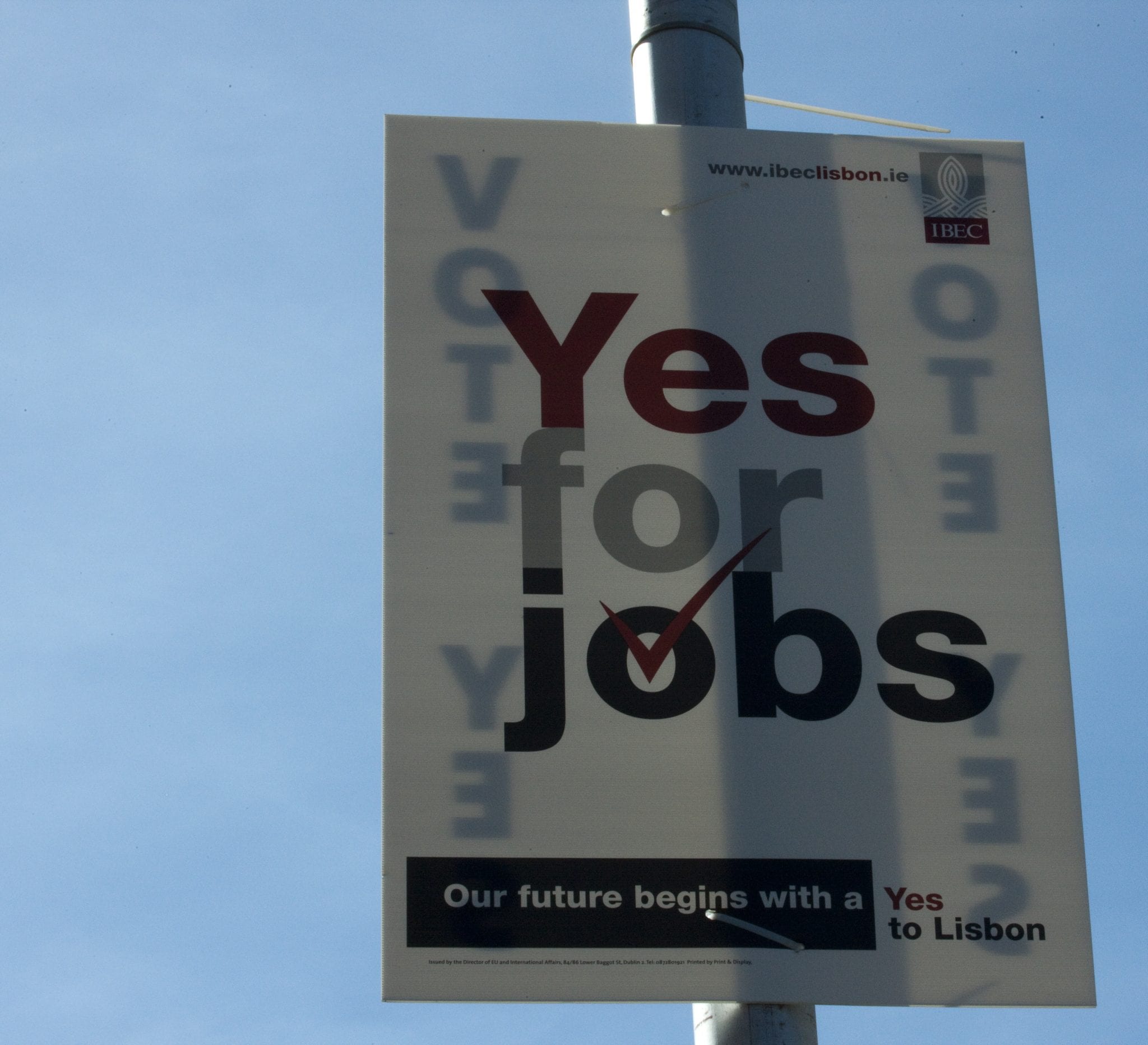
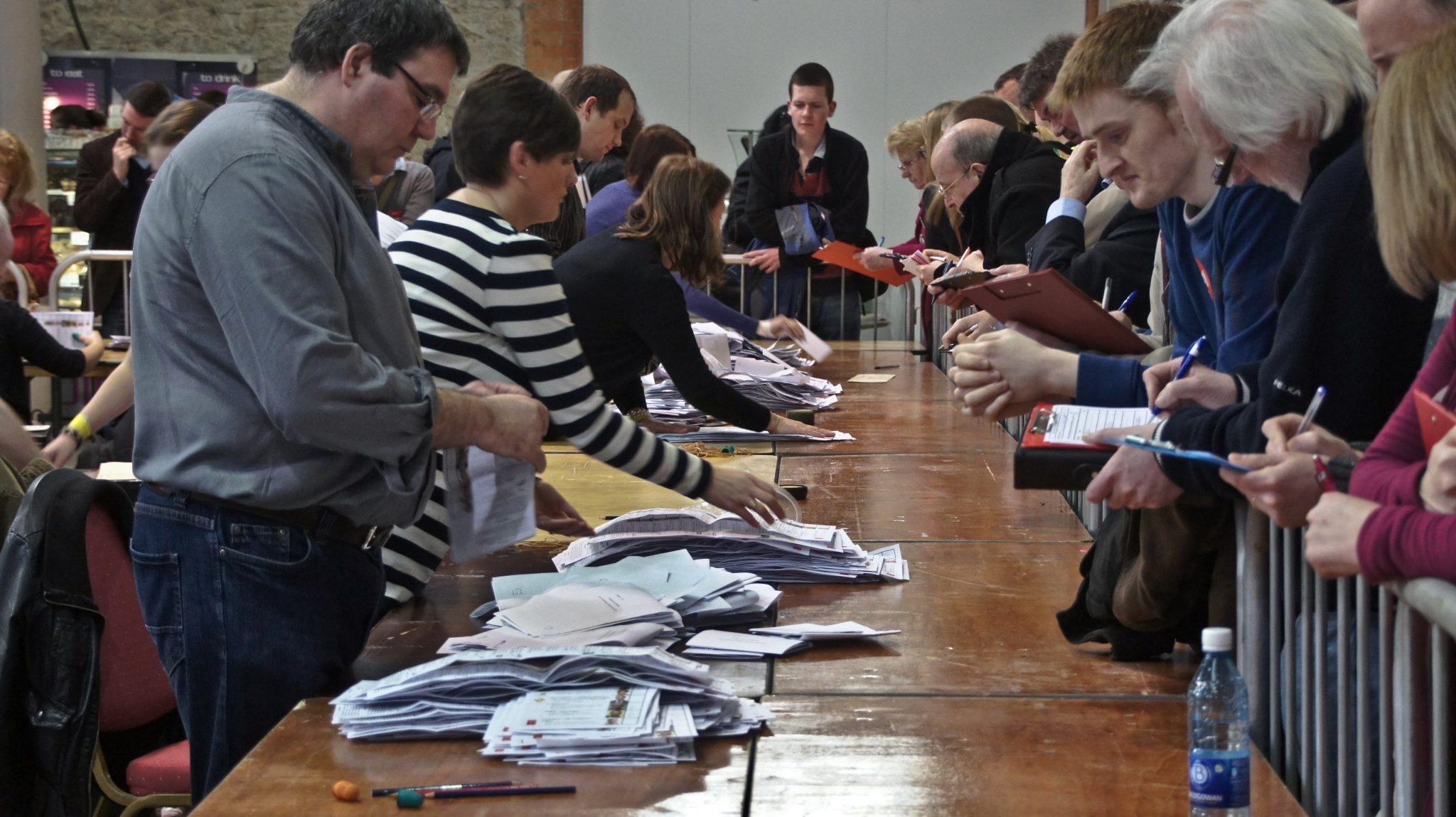
To make an informed decision, voters must assess both the policy platforms and the track-record of the political parties and candidates competing for their vote. A lack of objective and accessible information makes this a hugely challenging task, and many voters resort to judging parties and candidates on more superficial grounds such as campaign slogans and posters. Research conducted by Dr. Rory Costello of the Department of Politics and Public Administration at University of Limerick has sought to understand and address these problems. Systematic evidence regarding the performance of political parties in office has been collected and used to inform public debate during elections. Innovative online tools have been developed to help voters to compare the policy platforms of parties and candidates, and these have helped thousands of Irish voters – particularly young voters – to make an informed choice in elections.
Underpinning research
A defining feature of democracy is that voters can exercise a degree of control over government policy. Elections are designed to facilitate this, only if certain conditions are met. Parties must present clear policy choices to voters, and voters must take these policy alternatives into account when making their decision. Furthermore, parties must act upon their policy commitments once in office. Research undertaken by Costello has examined each of these conditions in the context of elections in Ireland and the EU, and has explored a number of significant challenges to effective representation in contemporary democracies.
Research conducted by Costello with Jacques Thomassen and Martin Rosema (University of Twente) shows how the level of policy agreement between voters and the party they support varies greatly depending on the issue (Ref 1). On economic matters, which tend to dominate election campaigns, voters are generally well represented by the party they vote for. However, on many important non-economic policy issues (such as immigration, the EU, and social issues such as abortion), there are often significant differences in the policies supported by parties and the views of their voters. This highlights an information deficit in elections: voters are often poorly informed about party policy, and often fail to select the party that best represents their views across the spectrum of policy issues.
The internet offers a potential solution to this problem. ‘Voting Advice Applications’ (VAAs) have become an important feature in elections in many countries in recent years, providing voters with a way to quickly compare parties and find out who they agree with the most. VAAs have been pioneered in Ireland by Costello and research on their effectiveness has been carried out by Costello with Matthew Wall, Laura Sudulich and Enrique Leon (Ref 6). This research confirmed the potential for VAAs to improve the quality of democratic participation, but also found a strong tendency for their use to be limited to those who are already politically motivated. More recently, Costello has sought to design VAAs that would reach a broader audience, and is currently conducting research (funded by the Irish Research Council) to evaluate this.
Even when voters do select the party that best represents their views, this is no guarantee that voters will influence government policy. Government parties often do not have the ability or incentive to implement the policy platforms that they put before the electorate. Impediments include a lack of internal party cohesion, lack of agreement between coalition parties, and economic instability. Research undertaken by Costello with Robert Thomson (University of Strathclyde) has investigated the effect of institutional arrangements such as bicameralism on party cohesion and coalition politics (Ref 2 and 3). The goal has been to gain a greater understanding of the conditions under which political parties are best able to act as representative channels.
Costello and Thomson have also examined election pledge fulfilment in a variety of contexts, finding that while parties in coalition governments usually succeed in honouring many election pledges, they are far less successful in this regard than single-party governments. Furthermore, voters are often poorly informed regarding the extent to which parties have in fact fulfilled their election pledges. This further weakens voters’ control over government policy, as voters are not in a position to punish parties for broken promises (Ref 4 and 5). The research points to the need for greater public scrutiny of election pledge fulfilment by government parties so that voters can more effectively hold their representatives to account.
Details of the impact
The research described above has influenced public debate during elections and has impacted directly on voters through a number of online voting advice applications.
Impact on voters through Voting Advice Applications
Costello and his collaborators created the first ever voting advice application in Ireland for the 2007 election called pickyourparty.ie. For the 2014 European Parliament elections, Costello worked with researchers from across the EU on a European-wide voting advice application www.euvox.eu. He led a research team based in UL that was responsible for the Irish content on the site, which involved extensive research into the party position of all Irish parties on issues salient to Irish voters. Costello then established a voting application tailor-made for the Irish political system, www.whichcandidate.ie.
WhichCandidate was initially trialled for local elections in Limerick in 2014. It was rolled out on a national basis for the 2016 general election. It was the first website in Ireland to provide voters with a means to compare election candidates on policy. Its design was informed by research into Irish voting behaviour, which shows the continued importance of candidate attributes for vote choice. The site gives each candidate the opportunity to present their policy positions on a wide range of issues, and voters can take a survey to discover which candidates best represent their views. It is independent, non-partisan and non-profit, and overseen by an academic advisory board. The site won the award for Best New Web Application/Service at the 2016 Realex Web Awards.
In the past, politicians have been reluctant to state their position on controversial issues for fear of alienating potential voters. The WhichCandidate project addresses this problem by asking all candidates to answer direct questions on a wide range of issues, including controversial issues that are often avoided by politicians. Candidates and parties have a strong incentive to participate, as by doing so they will be presented as a ‘match’ to voters who share their views. In this way, relevant information is put in the public domain that would not otherwise be available. The vast majority (65%) of candidates contesting the elections covered to-date have participated; for candidates who did not participate personally, the relevant information was supplied by their political parties.
As well as increasing transparency, these websites also inform the public and assist undecided voters. They have been widely adopted by national and local media outlets. The Irish Times has included both EUvox and WhichCandidate as an integral part of its election coverage since 2014, featuring a standing link to the sites during election campaigns. According to an editor at The Irish Times, ‘this is an example of a partnership that worked to the benefit of both sides without either party compromising on their values’ (Source 1). WhichCandidate has also been used as a key part of the online election coverage by five local and regional news organisations around Ireland.
The public impact of these online tools is evident in the volume of traffic they have attracted. Both PickYourParty and EUvox were each used by over 30,000 Irish voters, while WhichCandidate was used by more than 130,000 voters. The impact of these sites is particularly high immediately before an election, when undecided voters visit them for information and assistance. For example, over the course of the 2016 general election campaign, WhichCandidate received an average of 4,000 visitors per day, peaking at 18,000 visitors on the day of the election. As a point of comparison, the official website of the houses of parliament, oireachtas.ie receives around 2,500 unique daily visitors1.
WhichCandidate has been particularly used by younger, unattached voters, who are the most likely to abstain in an election when they feel they lack the relevant information. During the 2016 general election, 55% of WhichCandidate users were under the age of 35, and 64% did not consider themselves close to any political party and did not know who to vote for. The site was shared widely on social media, with 31,000 visitors coming to the site via Facebook and Twitter. Feedback from users suggests that the site helped many voters with their decision.
Impact on Public Debate
To maximize public impact, research has been produced and publicised during the relevant election campaign, rather than after the event as is usually the case with academic research. Over the course of several elections, Costello has conducted surveys of political parties and election candidates at the outset of the election campaign, and produced analyses of these surveys for a range of national and local media outlets (for example, Source 2, 3 and 4). These analyses have informed the public debate regarding the central policy differences between candidates and political parties, and journalists both in Ireland and internationally have used them as an election resource (e.g. Source 5).
Costello and Thomson’s work on the relationship between election pledges and subsequent government policy in Ireland has also informed the public debate around election time. The analyses of each outgoing government have been produced before the election date, and the results published in the national media (e.g. Source 6). These results have frequently been cited in media contributions by national politicians during election campaigns (e.g. Source 7), and Costello has contributed to several discussions on national radio on manifestos and election pledges (e.g. Sources 8 and 9). In this way, the research has helped to shape the public narrative regarding government performance.
Costello has also delivered high-profile public lectures on elections and democracy at a number of events attended by senior politicians, civil servants and journalists. These include the McGill Summer School and public events organised by the European Parliament Information Office and by the Royal Irish Academy (RIA). His contribution to an event organised by the RIA on the 2013 Seanad referendum was included in the submission by the RIA to the government during the consultation phase of the Seanad Electoral (Amendment) Bill (Source 10).
Private correspondence from an editor at The Irish Times.
Rory Costello, ‘Fine Gael and Labour differ on almost half of election issues – survey’. The Irish Times, 8th February 2016. http://www.irishtimes.com/news/politics/fine-gael-and-labour-differ-on-almost-half-of-election-issues-survey-1.2527221
Dr Jakki Cooney, co-founder of UL spinout Cala Medical, based in the Nexus Innovation
Researchers at the University of Limerick are developing skills in interdisciplinary working and using this

In Ireland, only 30% of women and 45% of men over 65 remain disability-free for